Letters from his mother
Promise at DawnLetters from his mother are a secret wartime correspondence that sustains the narrator through three and a half years away from home. Brief, undated notes travel from his mother to a friend in Switzerland and then to London, addressed to him in the care of General de Gaulle. Their importance lies not in the military record they describe, which is largely imagined, but in the force with which his mother's confidence reaches him and shapes his understanding of duty, artistic possibility, and their enduring bond.
Form and Route of the Letters
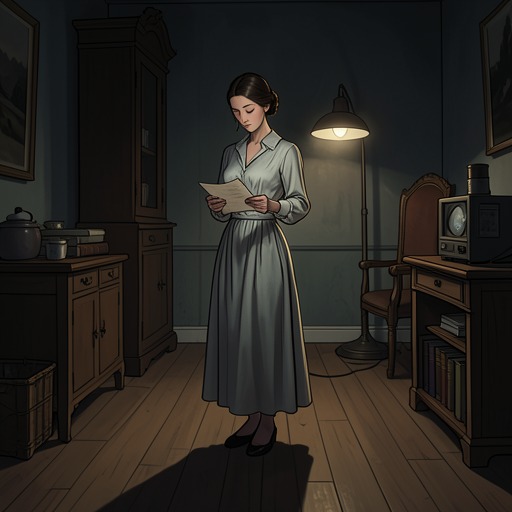
The first letters arrive shortly after the narrator reaches England. His mother sends them secretly through a friend in Switzerland, from whom they are forwarded to London. The notes are only a few lines long, usually written in pencil, and carry no dates. They continue to follow him through his wanderings until he returns to Nice three years and six months later, on the eve of victory. Their dateless quality makes them seem detached from ordinary chronology: the narrator describes them as if they came from eternity, while their successive arrival gives the separated pair a continuing private connection.
The Hero His Mother Imagines
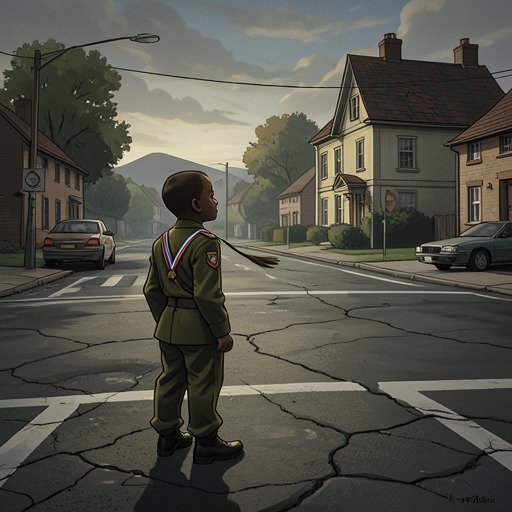
The notes grow more exalted in tone, as his mother assumes that he is accomplishing extraordinary feats. She casts him as a champion across several fields: more dexterous than the juggler Rastelli, greater at tennis than Tilden, and braver in the air than Guynemer. The narrator reads these descriptions with satisfaction, even though he knows that his champion's career has scarcely taken shape. He keeps up daily exercise, plays ping-pong successfully against his squadron companions, juggles five balls, and continues writing his novel A European Education. The letters therefore meet an effort already under way: he is trying to maintain the physical discipline and imaginative faith that his mother's picture of him demands. His mother's reports turn distant military events into proof of her son's exploits. Whenever the Royal Air Force raids a target, she assumes he is among the airmen; she hears his presence in each bomb burst and credits him when English fighters bring down German aircraft. In another note, she says that all of Nice is proud of him and that she has visited his former teachers at the lycée to tell them so. She listens to the BBC and imagines that its reports of attacks on Germany concern him, while recognizing that his name cannot be announced because doing so could cause difficulties for her. In her private world, his deeds fill every front and even echo through the alleys of the Buffa Market, Nice. The letters make the absent son omnipresent to the mother who waits for him.
Distance Between the Letters and the War
The correspondence's confident account collides with the narrator's actual wartime experience. He says that from his first flights in Africa he was not allowed to keep his promise to fight the enemy. His aircraft repeatedly returned him to the ground after crashes and mishaps, and his service included routine flights and long periods of frustration. After one crash, he is found unconscious inside the aircraft; later, while stranded beside wreckage, he uses five green African oranges to steady himself and make a defiant gesture. The letters do not record this gap between expectation and experience. Instead, he carries his mother's last letter in his pocket as he sits beside a fallen aircraft, reads again of her absolute confidence in his heroic deeds, and gets up to try once more. Her imagined account does not change what happened in the air, but it remains a source of resolve amid repeated disappointment.
The Correspondence as an Unbroken Bond
The letters draw their emotional force from a relationship shaped long before the separation. As a child, the narrator becomes critically ill after scarlet fever, and his mother refuses to allow an operation on his kidney despite the doctors' recommendation and the arrival of a specialist from Berlin. Years later, she collapses after giving herself too much insulin; the episode reveals that she has been concealing her diabetes while continuing her demanding work. These earlier scenes show the mother as both a source of care and a person whose vulnerability terrifies her son. They give added weight to his fear of leaving her unsupported and to the later correspondence that carries her voice across wartime distance. During a near-fatal illness in Damascus, the narrator likewise describes the maternal bond as a cord that continues to function while his mind and body recover. The image becomes explicit in his wartime vision of returning to the Buffa Market, Nice, decorated and accompanied by his mother, still joined to her by a long tube issuing from his veins. The letters make that imagined connection tangible in the years before the return: they arrive in his pocket and, in his account, breathe life into him with a will stronger than his own. Their ending is also the ending of a separation. They follow him until he comes back to Nice, on the eve of victory, having carried both his mother's imagined triumphs and the painful knowledge of how far his actual service fell short of them.